Gen Z and AI: Young People Defend Creativity
Updated on
Anti-AI protests led by younger generations—with Gen Z at the forefront—are steadily on the rise. Some of these demonstrations have been nothing short of dramatic, going viral across social media and major news outlets:
- Gloria Caulfield, Vice President of Tavistock Development Company, was met with a chorus of boos and jeers during a commencement ceremony at the University of Central Florida after calling AI "the next industrial revolution";
- former Google CEO Eric Schmidt faced a similar reception in Arizona, as did music producer Scott Borchetta in Tennessee;
- things took an even worse turn at Glendale Community College. During a graduation ceremony, an AI-powered software read the graduates' names, mispronouncing and omitting a significant number of them. Once a college official admitted that the errors were due to the use of AI, the crowd erupted, forcing a lengthy apology;
- grassroots movements like Pause AI and Pull The Plug are also gaining traction. On February 28th, their members marched in protest through London, targeting the offices of OpenAI, Meta, and Google DeepMind.

The Data Behind the Backlash: Why Gen Z is Skeptical of AI
This public wave of skepticism is backed by hard data. A survey conducted by Gallup, GSV Ventures, and the Walton Family Foundation interviewed 1,572 young people aged 14 to 29 between February and March 2026. The findings speak for themselves: although more than half of the respondents (51%) admit to using AI tools at least once a week—with 49% expressing curiosity about its potential—approval rates for major LLM tools (like ChatGPT, Gemini, etc.) plummeted from 36% to 22%. Meanwhile, negative emotions are on the rise, with anxiety hitting 42% and anger at 31%.
This shift is driven by the fact that 48% of respondents believe the risks of AI outweigh its benefits, fearing it could hinder not only learning but also human creativity and critical thinking. This is not an outright rejection of technology or a fear of innovation itself. Rather, it is a deep-seated concern over the social and economic consequences of its unregulated use. In the medium term, young people worry about tougher job markets, the devaluation of human talent and skills, a loss of control over information, and the exploitation of personal data and intellectual property.
Equally sobering statistics emerge from the workplace. A joint survey by Writer and Workplace Intelligence of 2,400 professionals across Europe, the UK, and the US found that 29% of employees oppose corporate AI adoption—a figure that jumps to 44% among Gen Z workers. Furthermore, research by KPMG reveals that a staggering 52% of employees fear being replaced by AI. This anxiety has earned its own acronym: FOBO, or the Fear of Becoming Obsolete.
The Boomer Paradox: Why Older Generations Are Embracing AI
Market research firm Numerator uncovered an intriguing trend while surveying consumers who avoid AI. Out of 5,000 respondents, 57% of Gen Z stated they have no desire to use AI, compared to just 32% of Baby Boomers. Supporting this, a study by GWS found that 16% of Gen Z respondents do not want AI features on their smartphones, compared to only 9% of Boomers.
This suggests that older generations are actually more open to AI adoption than their younger counterparts. It is a striking reversal of historical trends, where youth have traditionally spearheaded technological shifts. Here, older adults are showing greater curiosity and willingness to give the technology a chance, focusing primarily on its practical conveniences.
What Does Gen Z Really Want?
For today's youth, authenticity, mental and physical well-being, and genuine human connection are top priorities. They believe AI threatens these values by potentially replacing human thought and creativity. The worry is that over-reliance on AI breeds cognitive laziness, resulting in derivative content that lacks genuine value.
This raises an ethical dilemma, and we need to draw a clear line. Setting aside the debate over job displacement—which many leading analysts argue is an overblown fear—let's focus on culture, creativity, and critical thinking.
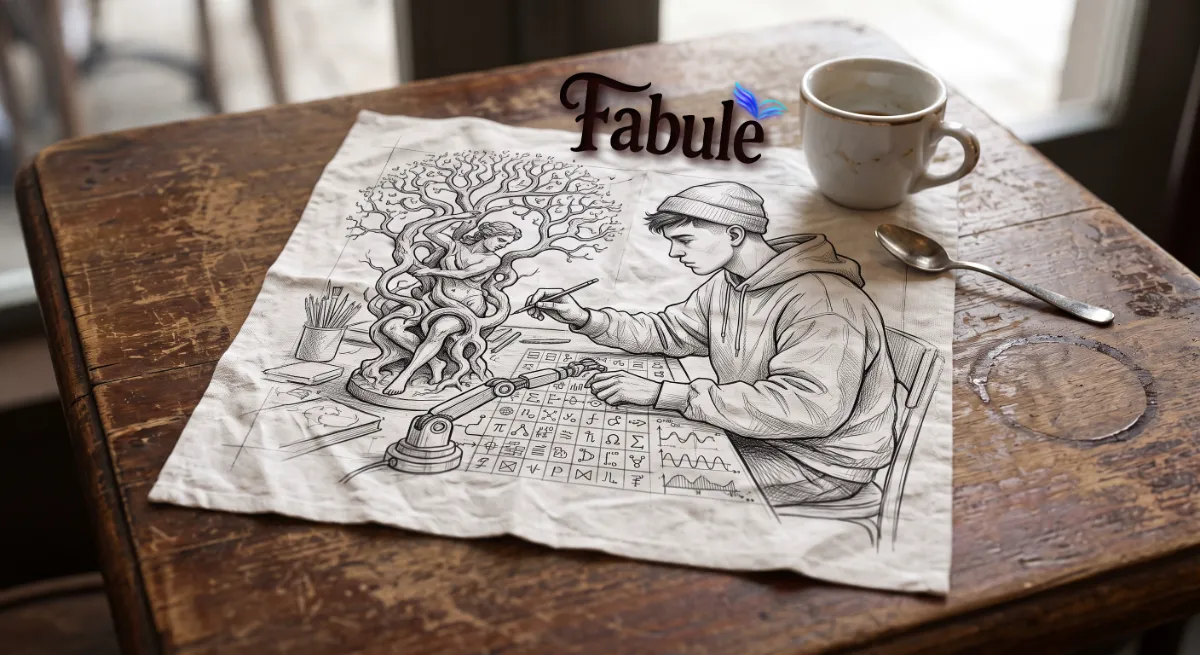
The issue isn't the technology itself, but how we choose to use it. If we treat artificial intelligence as a substitute for human thought, we risk atrophying our logical and critical faculties, passively consuming homogenized content churned out by whichever LLM is in vogue. On the contrary, as we have always maintained, AI should act as a catalyst—a tool that challenges us to think deeper, ask better questions, and discover new pathways to solve problems. Simply put, it should help us push past our creative boundaries while keeping our energy focused in the right direction.
How Fabulè Views the AI Revolution
This has been the core mission of Fabulè since day one, captured in one of our core principles: AI must be a booster, not an alias for human intelligence.
Within the context of our reading companion, Fabulè is not designed to replace the reader. Instead, it encourages reading, sparks curiosity, prompts deeper reflection, and helps maintain narrative transportationation. The act—and, of course, the sheer joy—of reading remains entirely in the hands and mind of the reader.
While we wholeheartedly embrace innovation, we stand firmly with Gen Z on ethics and values. AI must remain a tool that serves humanity and enriches our lives—just as technological breakthroughs have done throughout history. It should never usurp human mental processes. Our work is built on this very foundation. Finding this shared vision with younger generations allows us to look toward the future not with dystopian dread, but with confidence, peace of mind, and a shared commitment to shaping ethical, sustainable technological progress.
Why is Gen Z critical of AI?
Gen Z does not oppose AI itself. Rather, they believe its current risks outweigh the benefits, worrying it could become a barrier to learning, creativity, and critical thinking.
Why are young people afraid of AI?
Their concern isn't with the technology itself, but with the risk that over-reliance on AI will erode human creativity, independent learning, critical thinking, and future career opportunities.
Is Gen Z really against AI?
No. Most young people use AI tools regularly, but they advocate for using them as a supportive tool rather than a replacement for human thought.
Why do Boomers use AI more than Gen Z?
Older generations are often more receptive to the immediate practical conveniences offered by AI, whereas younger people tend to focus heavily on its ethical, cultural, and long-term societal implications.
What does Gen Z want?
They want authentic connections, mental well-being, job security free from the threat of AI displacement, and to safeguard the value of human learning, critical thinking, and creativity.
How does Fabulè believe AI should be used?
Fabulè has always advocated for the ethical use of AI: it should stimulate critical thinking, never replace it. AI should help people delve deeper and better understand content without overshadowing human intelligence and creativity. As one of our core principles states, AI must be a booster, not an alias for the human mind.
References
Try Fabulè to find the thread of your readings
Start for free